
Spot Extractor Arm Fume Hood
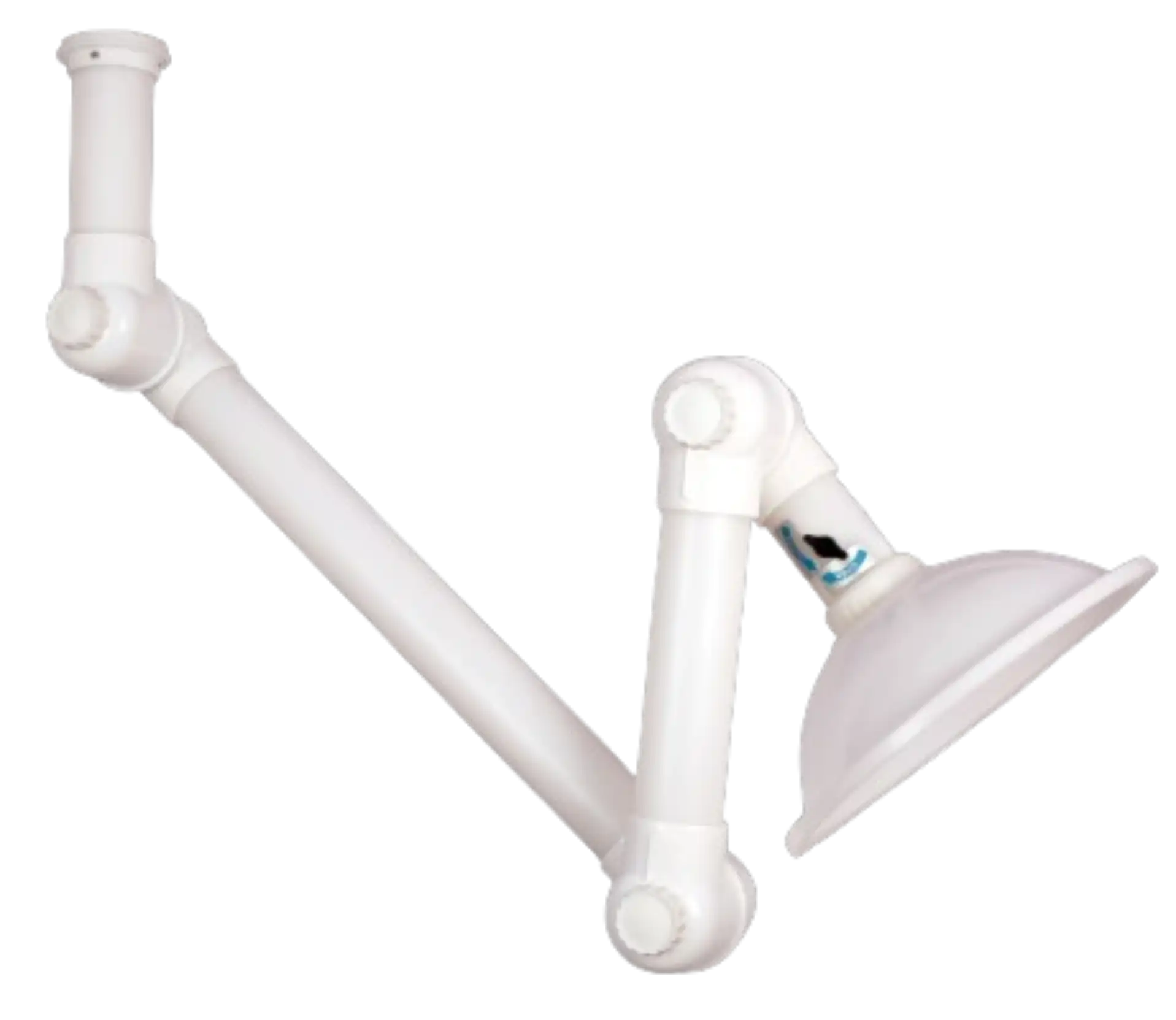
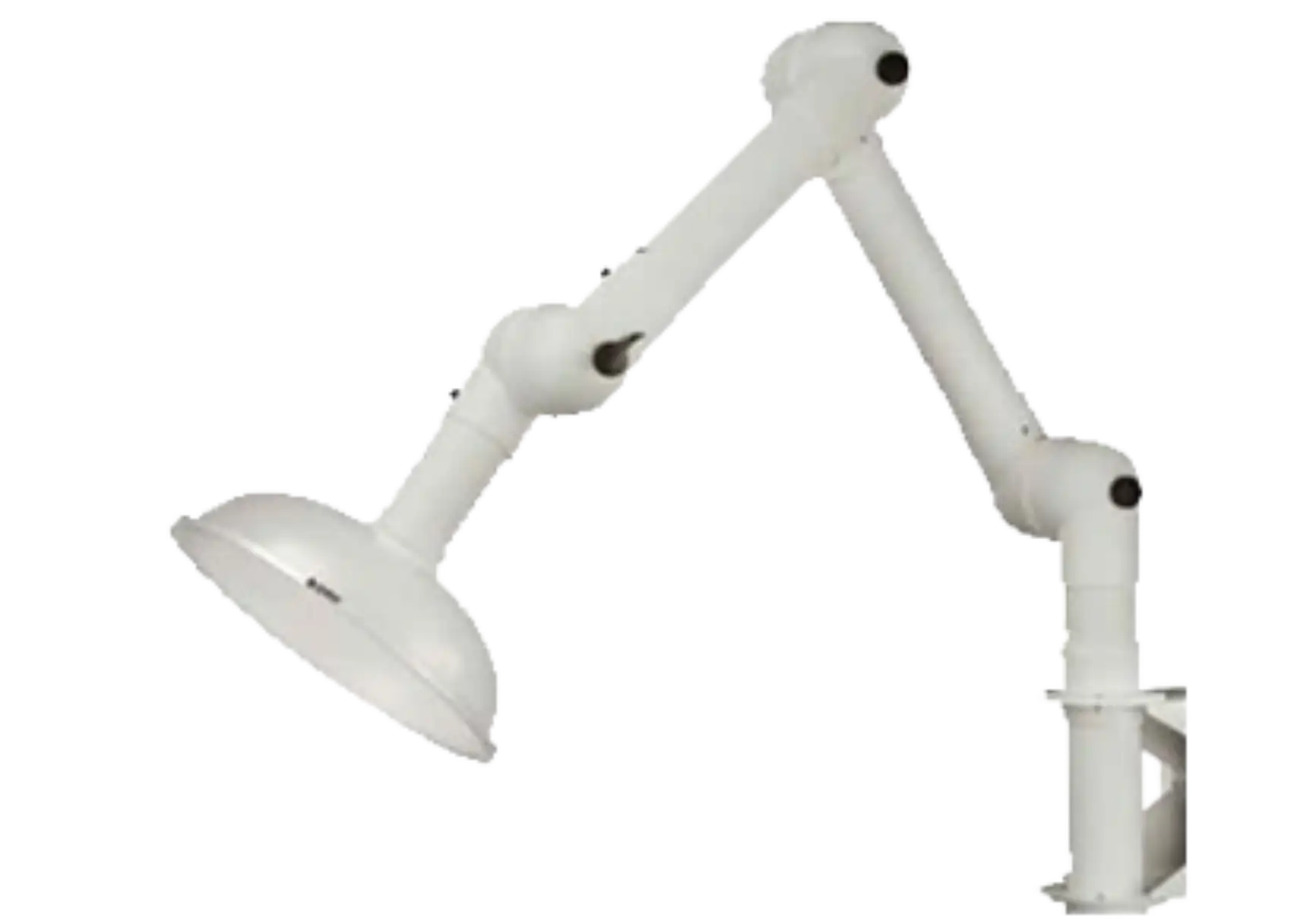
Extractor arm fume hoods — also known as laboratory extraction arms — capture hazardous fumes, dusts, and vapours at the source of generation. A more targeted, energy-efficient approach to laboratory safety compared to traditional canopy hoods.
Source Capture vs. General Ventilation — Key Differences from Canopy Hoods
Extractor arm fume hoods serve a fundamentally different purpose compared to traditional canopy hoods. While canopy hoods are mounted overhead and remove heat, steam, and non-toxic fumes from a large zone, extractor arms are positioned directly adjacent to the source of fume generation — capturing contaminants before they disperse into the laboratory atmosphere.
This source-capture approach means that the extractor arm intercepts hazardous vapours, dusts, and fumes at the point where they are generated — at the reaction vessel, at the sample prep surface, or at the equipment outlet — rather than allowing them to rise and dilute into the room air before a ceiling-mounted canopy captures them. The result is higher capture efficiency at significantly lower airflow rates, delivering both better protection and lower energy consumption.
The flexible arm design allows the hood to be repositioned as needed throughout the working day — following the experiment, following the equipment, or following the researcher’s working position — giving a level of versatility that a fixed canopy hood cannot match.
Focused Source Capture
Extractor arms have a flexible hood positioned directly next to the experiment, effectively capturing contaminants right where they’re produced — at the source rather than after dispersion into room air.
Reduced Airflow & Energy Savings
Since they target specific areas, extractor arms require significantly less overall airflow compared to canopy hoods — leading to energy savings on HVAC and blower systems throughout the facility.
Increased Versatility & Repositionability
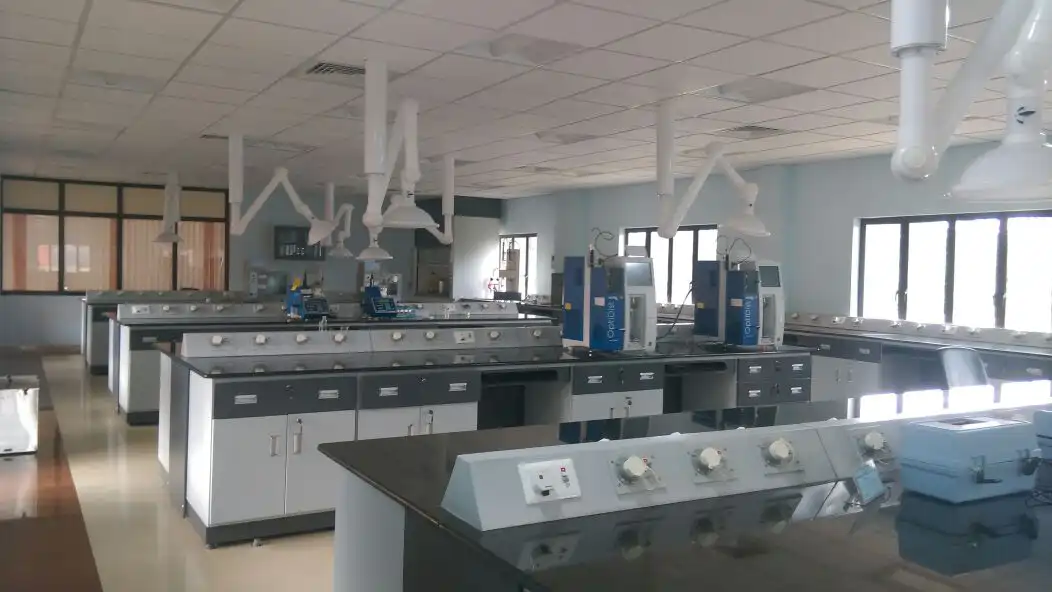
The flexible arm allows for easy positioning over various workstations or equipment within the laboratory — a single extractor arm can serve multiple working positions throughout the day.
Hazardous Chemical Capability
Unlike canopy hoods which are limited to non-toxic applications, extractor arms are suitable for working with hazardous chemicals, toxic fumes, and carcinogenic materials when properly selected and positioned.
Laboratory Applications Where Extractor Arms Excel
These benefits make extractor arms ideal for a variety of laboratory applications where targeted capture is essential:
Hazardous Chemical Handling
Extractor arms offer superior protection when handling toxic or carcinogenic materials — capturing fumes at the source before they can reach the breathing zone of the laboratory operator.
Small-Scale Procedures
For experiments with limited fume generation, extractor arms provide efficient capture without excessive ventilation — a cost-effective and energy-efficient alternative to full fume hood enclosures.
Powder & Dust Processes
The targeted capture approach helps prevent airborne particulates and dust from spreading throughout the laboratory — protecting both personnel and sensitive instruments or experiments nearby.
Multiple Workstation Coverage
A single extractor arm on a flexible mount can be repositioned to serve multiple workstations throughout the day — maximising coverage while minimising the number of extraction points required.
Solvent Evaporation
Capture solvent vapours during sample preparation, solvent evaporation procedures, or rotary evaporation setups where localised extraction is more effective than room-wide ventilation.
Portable Equipment Exhaust
Direct extraction from portable laboratory equipment — hotplates, stirrers, digestion blocks, and other devices that generate fumes or vapours during standard analytical procedures.
Extractor Arm Fume Hood — Key Features
Hood Styles
Different hood designs available — dome hoods, slot hoods, and nozzles — to suit various applications and source geometries within the laboratory.
Arm Reach
The reach of the flexible arm (up to 2,630 mm extension) determines the area it can cover within the workstation — allowing one arm to serve a wide working zone.
Airflow Control
Adjustable airflow allows for optimising capture efficiency based on the procedure being performed — from low-flow sample prep to high-flow volatile solvent evaporation.
Filtration Systems
Depending on the type of contaminants, some models integrate filtration systems to clean the extracted air before releasing it — eliminating the need for external ducting.
Spot Extractor Arm — Technical Specifications
📋 Complete Specification
| Material | Chemical resistant polypropylene |
| Arm Diameter | 75 mm |
| Arm Length | 3 m (metres) |
| Air Suction Volume | 140–400 m³/h (80–235 CFM) |
| Maximum Arm Extension | 2,630 mm |
| Standard Temp. Resistance | Up to 175°F |
| Recommended Airflow Range | 100–1,250 CFM |
| Hood Styles | Dome, Slot, Nozzle — application specific |
| Filtration | Optional — model and contaminant dependent |
| Mounting | Wall, bench, or ceiling-track mounted |
Spot Extractor Arm — Click Any Image to View Full Size
Click any image to open in full view · Navigate with arrows or keyboard (← → Esc).
Limitations to Consider Before Selecting an Extractor Arm
Extractor arm fume hoods may not be suitable for all situations. Key limitations to keep in mind:
Limited Capture Zone
Their effectiveness relies on positioning the flexible hood close to the source of contamination. If the arm is not correctly positioned, capture efficiency drops significantly — user awareness and correct positioning are essential for effective protection.
User Positioning
Working with the extractor arm in close proximity to the source might be inconvenient for some procedures — particularly those requiring two-handed work over a wide area where the arm position may obstruct access or limit freedom of movement.
Highly Volatile Chemicals
For highly volatile or explosive materials, a fully enclosed fume hood with a sash might be necessary for optimal safety. Extractor arms are not a substitute for a traditional fume hood when handling high-volume or extremely hazardous vapour-generating procedures.
Get a Quote for Spot Extractor Arm Fume Hood
📄 Click to Send Your Enquiry
For your lab furniture and workstation requirements. Fill out the form and send the details to us. We will contact you within working hours.
Open Enquiry Form → 💨 Fume Hood📄 Laboratory Fume Hood – Enquiry Form
For your lab fume hood and extraction system requirements. Fill out the form and send the details to us. We will contact you within working hours.
Open Fume Hood Enquiry →